This is the class I have been waiting for and was the main reason I signed up for this course. I could print a few objects I made in the parametric design session from week 1, but to make things more interesting and test the different physical properties of various filaments, I decided to focus on experiments rather than complex design this week.
Goals: 3D print something that cannot be made subtractively, and 3D scan something.
3D Print 1 — TPU Phone Case
First, I chose TPU to print a phone case that I could actually use on my iPhone 16 Pro Max. The file was in STL format and cannot be printed directly. It needs to go through slicer software and export to G-code (essentially instructions that tell the 3D printer how to print layer by layer).
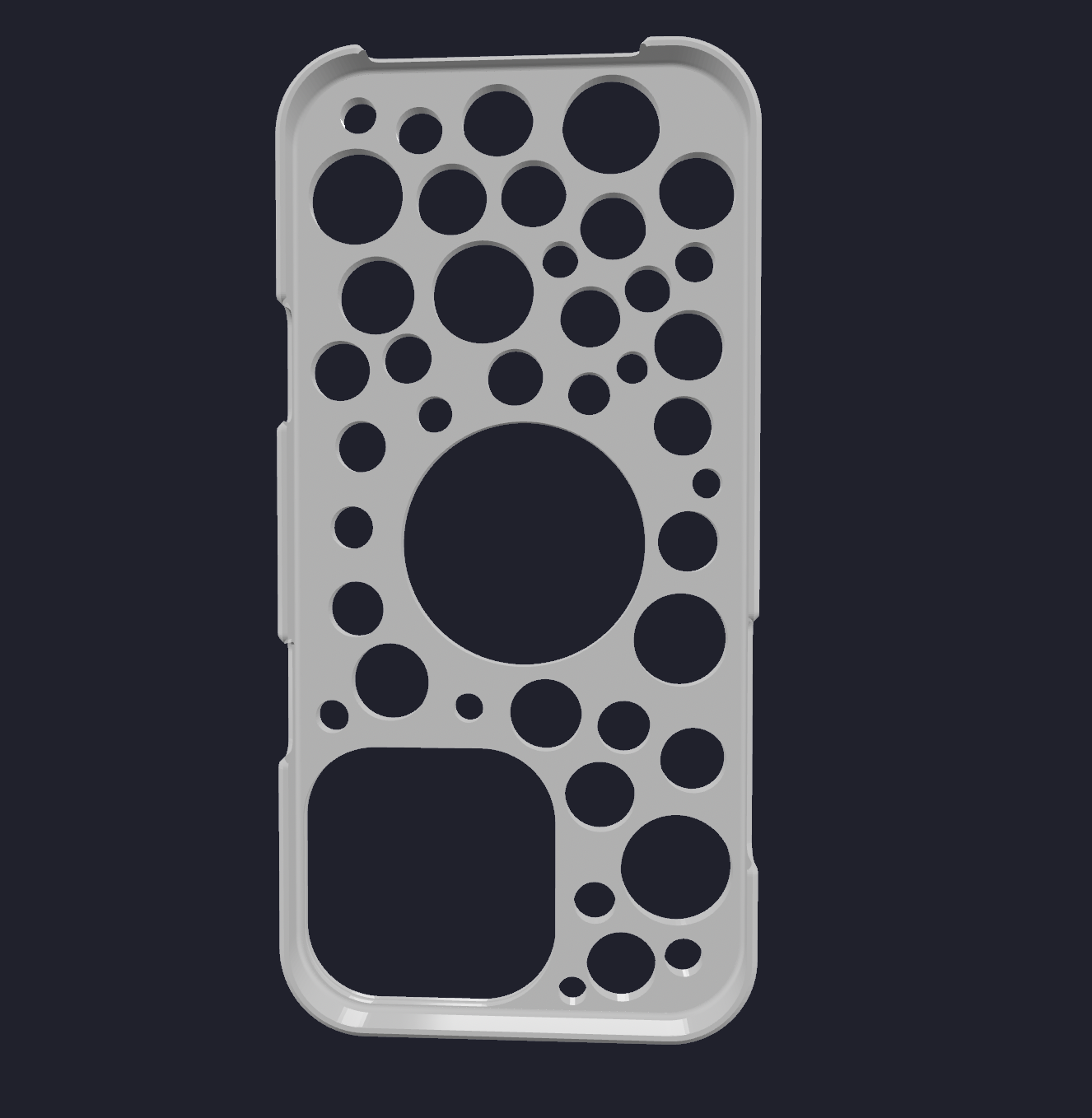
Design features weight-minimizing cutouts
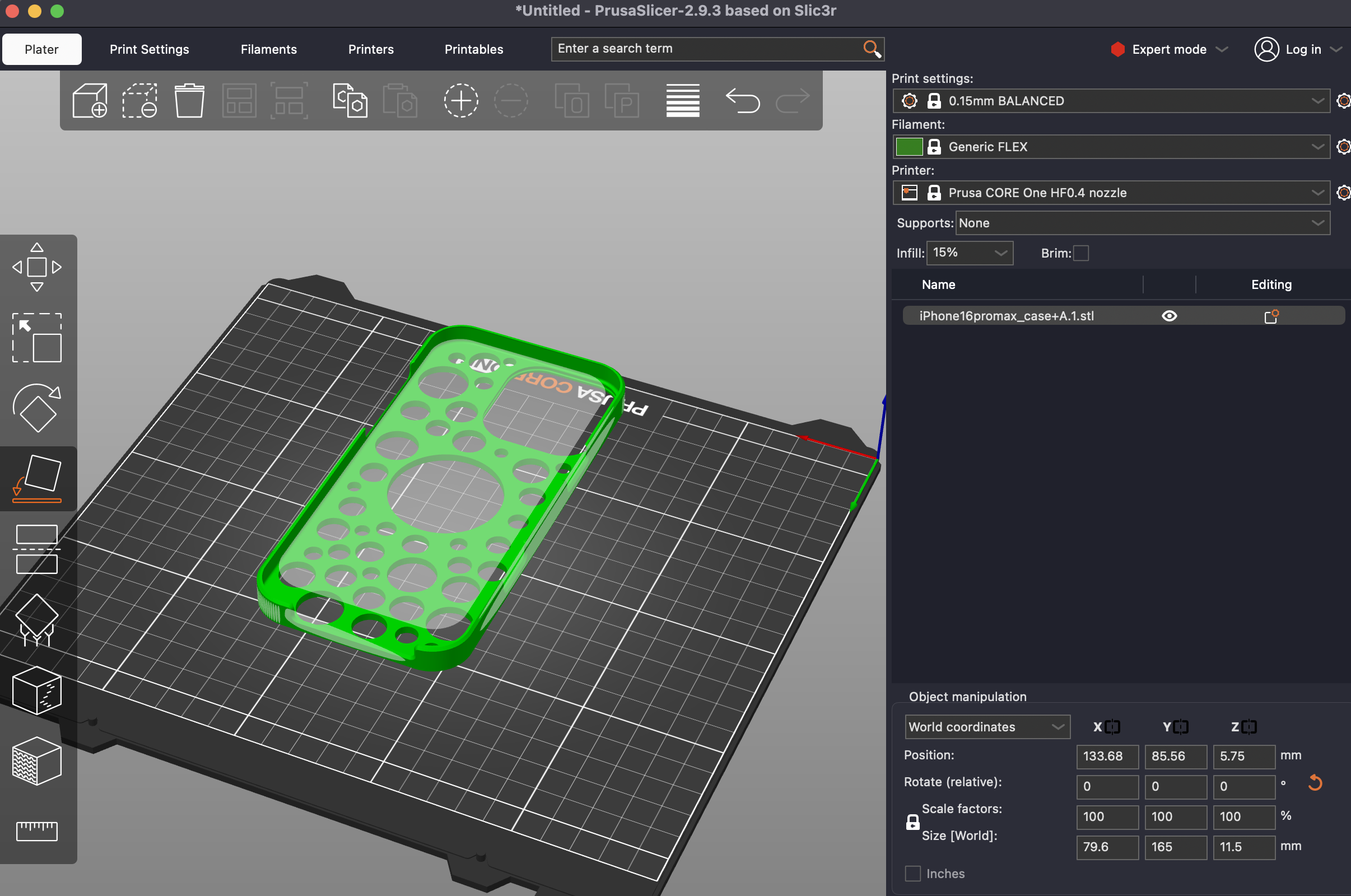
Choose Generic Flex profile for TPU
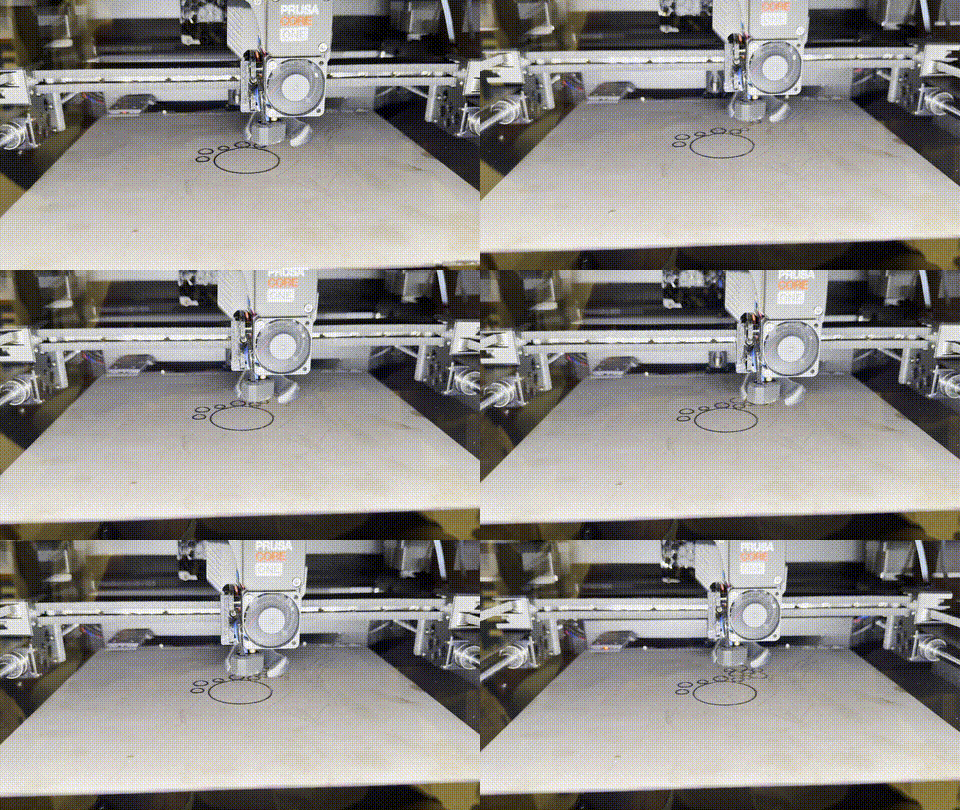
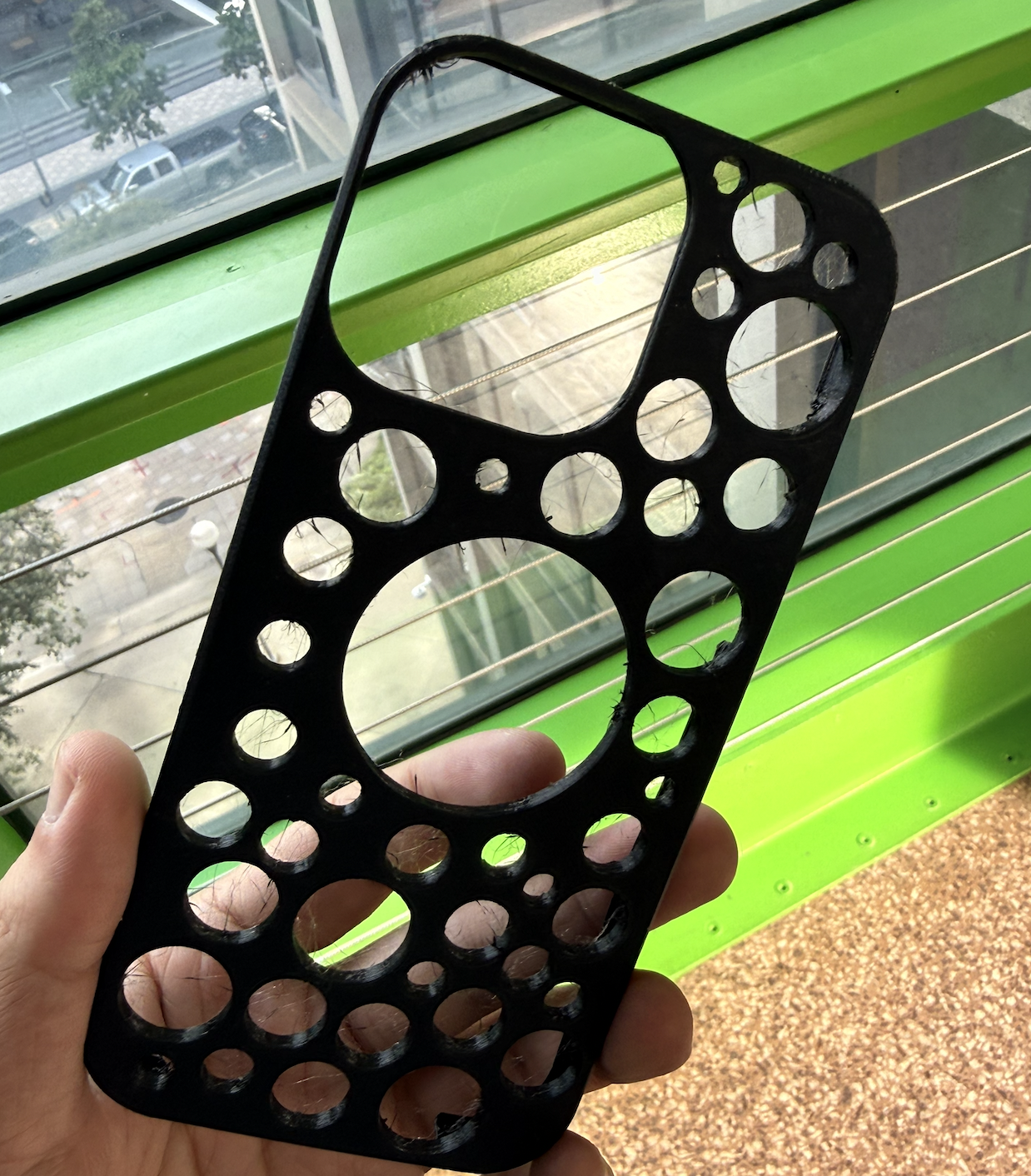
The phone case looks reasonable, but since it is TPU and soft, the case edges do not have enough grip. It would fall off the phone. To make it work, I need to make the case tighter and probably adjust the structure a bit.
3D Print 2 — PLA Anime Figurine
I found a nicely crafted STL file of one of my favorite anime characters: Frieren and the Treasure Chest Monster (Mimic). The first print failed, but Jesse recommended using organic support for this particular model.

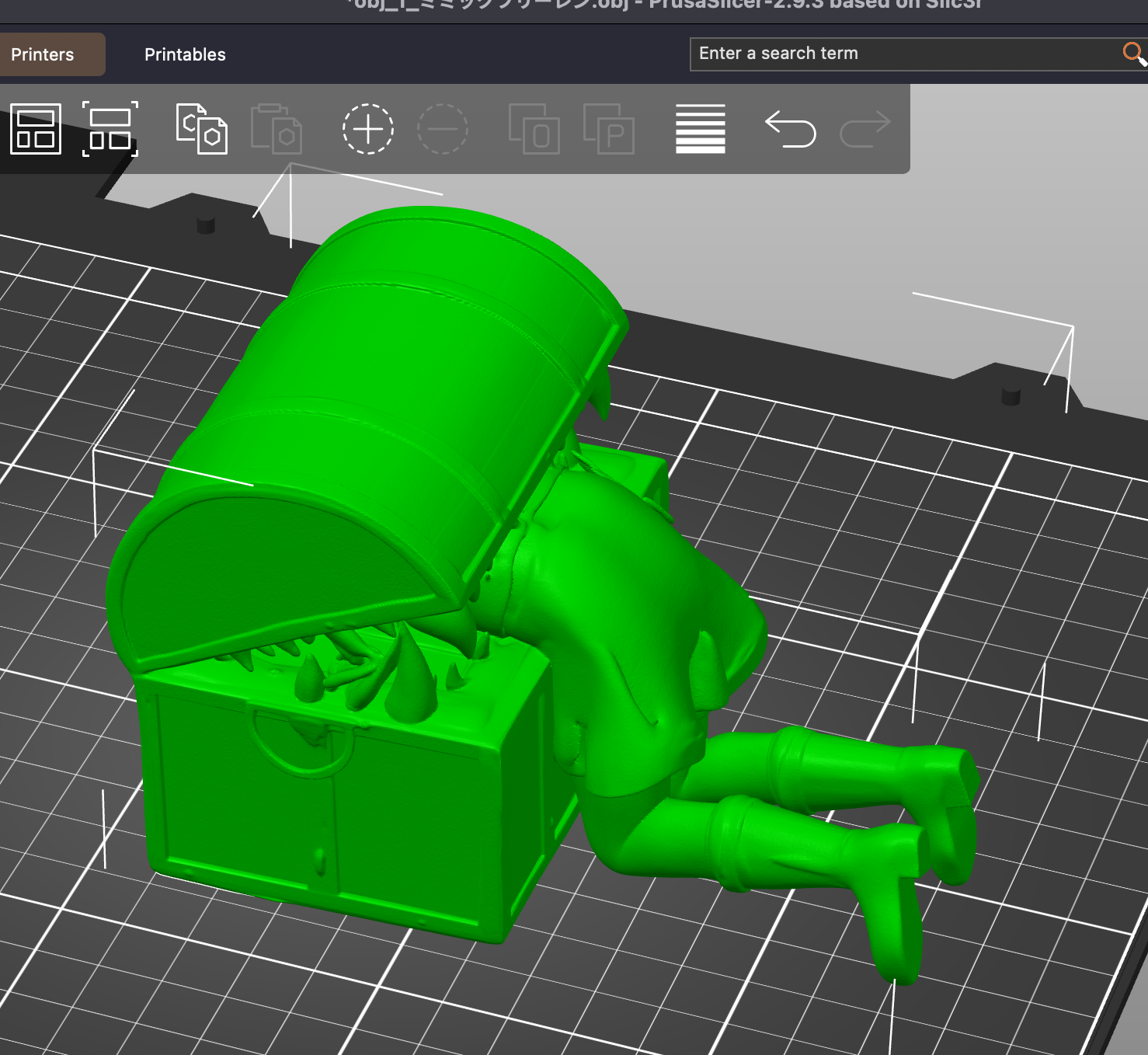
Original model design
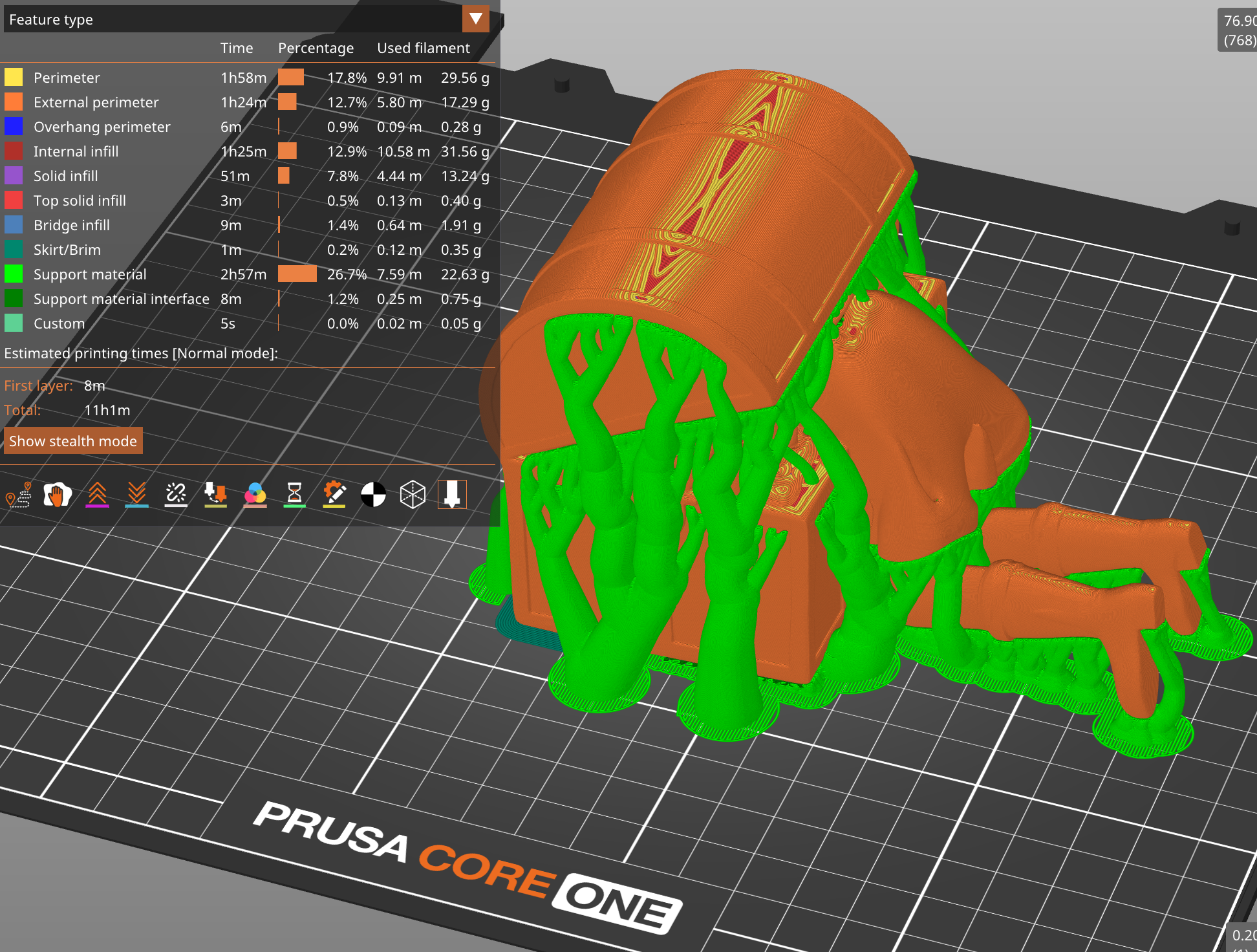
Creates an eerie appearance before cleanup
3D Printer Settings:
- Layer height: 0.10 mm
- Filament: PLA
- Infill: 10% (5% would also work)
- Support: Everywhere, Organic Style
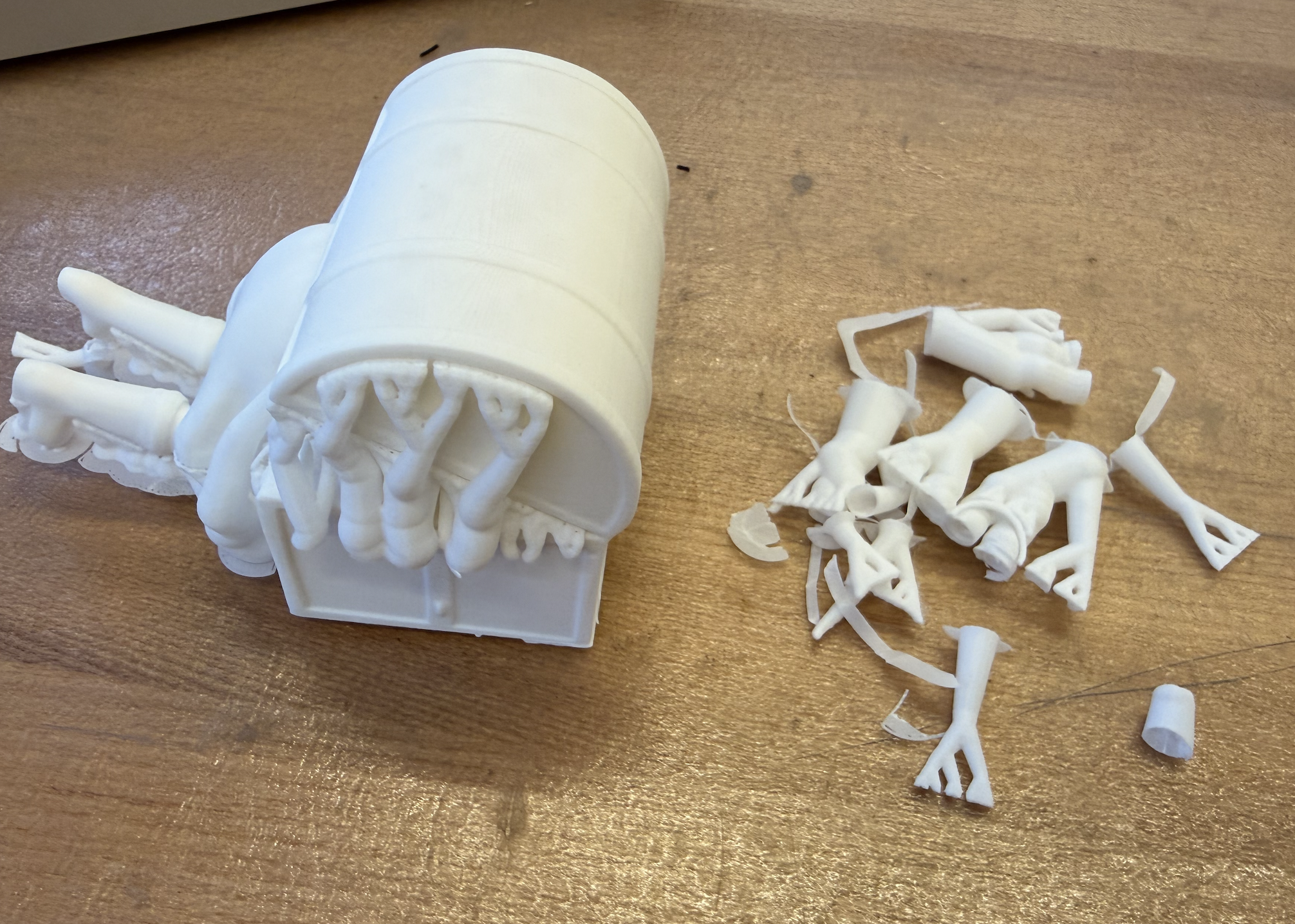
Brim is easy to remove
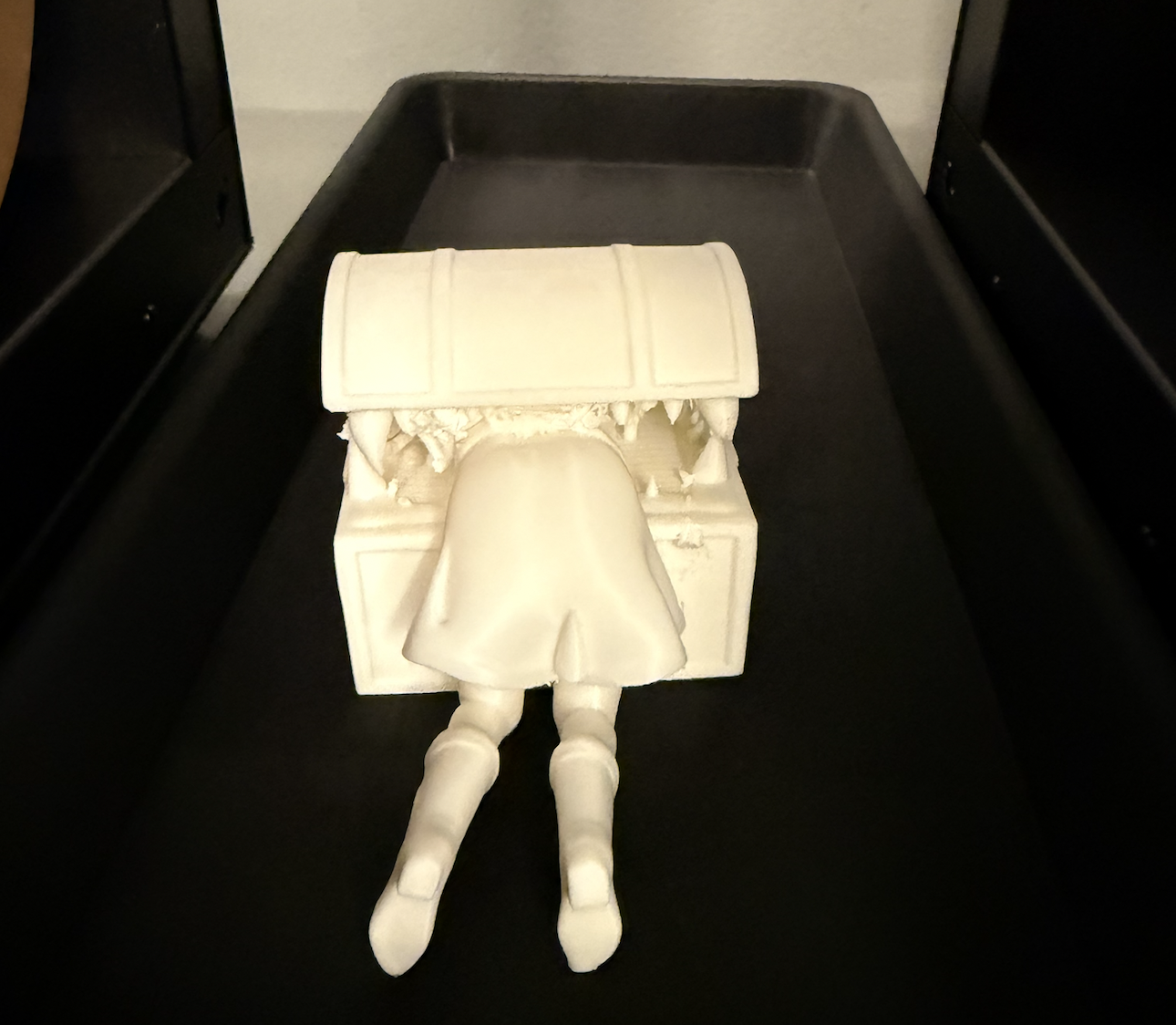
The rest takes forever
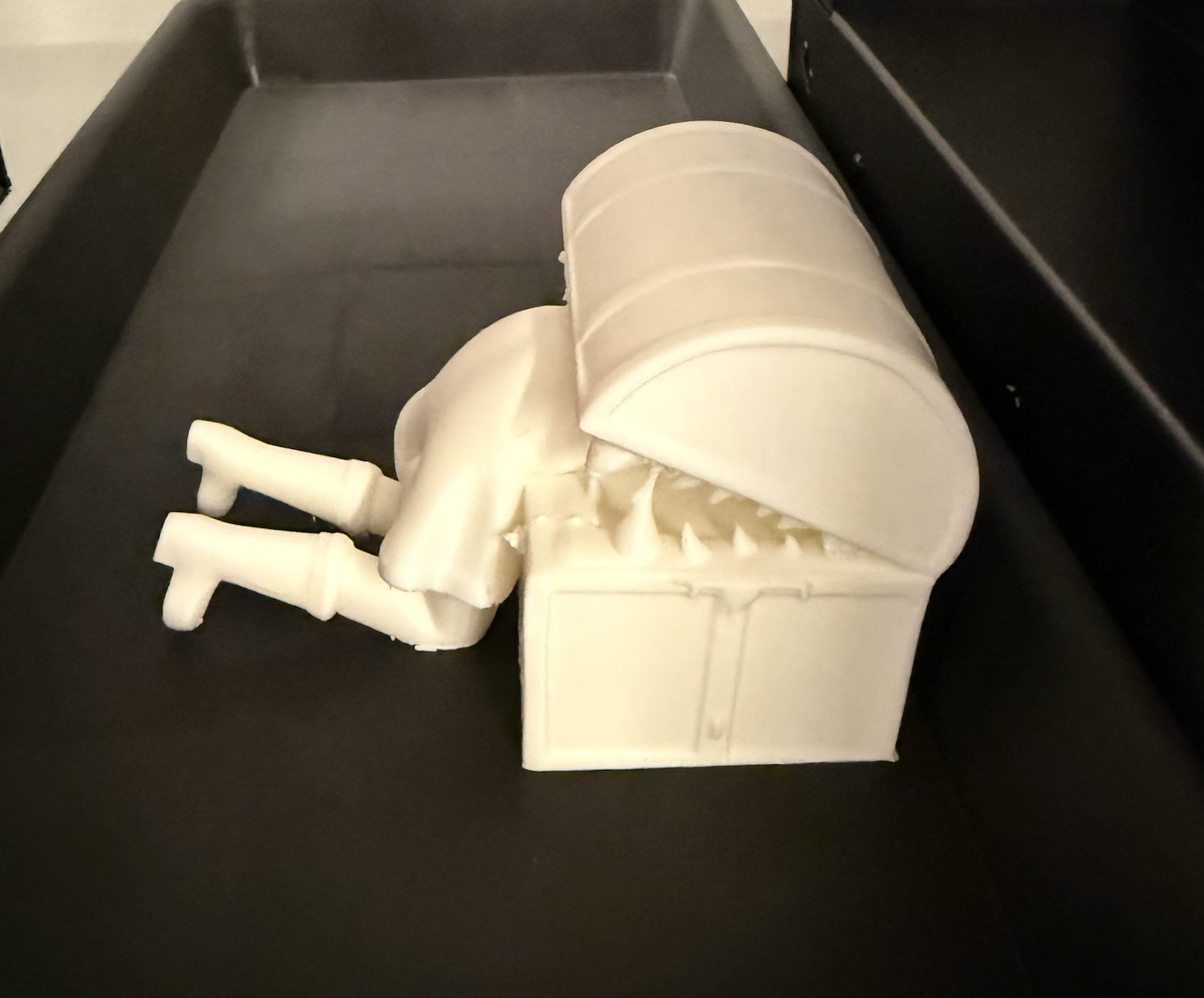
Tearing down support structures takes about an hour
3D Scanning
I experimented with scanning two different materials: one stuffed toy with lots of fur and one figurine. Both worked surprisingly well. The figurine was missing part of the face, likely because the lighter color reflected the scanner differently.
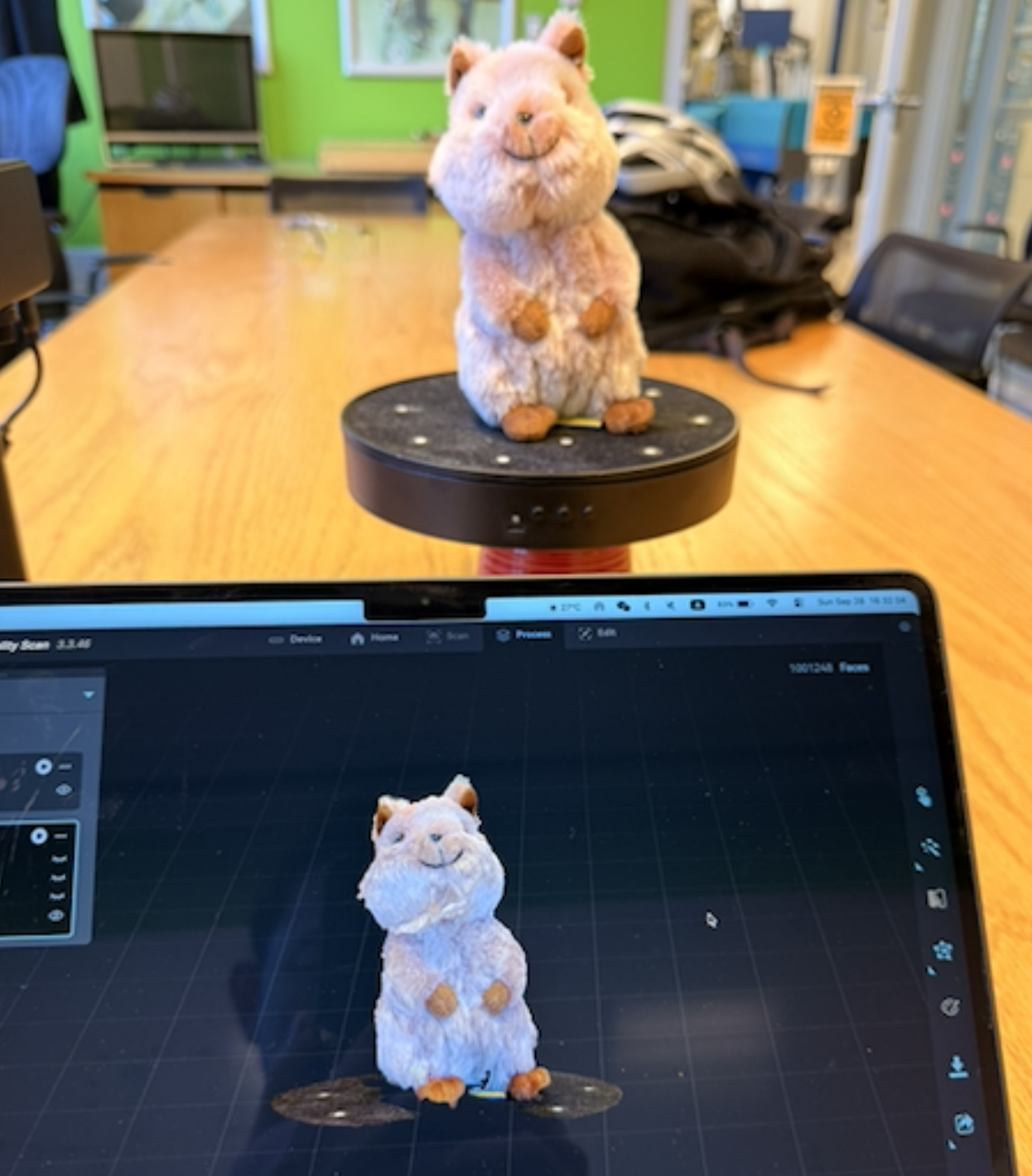
Works amazingly well on fur
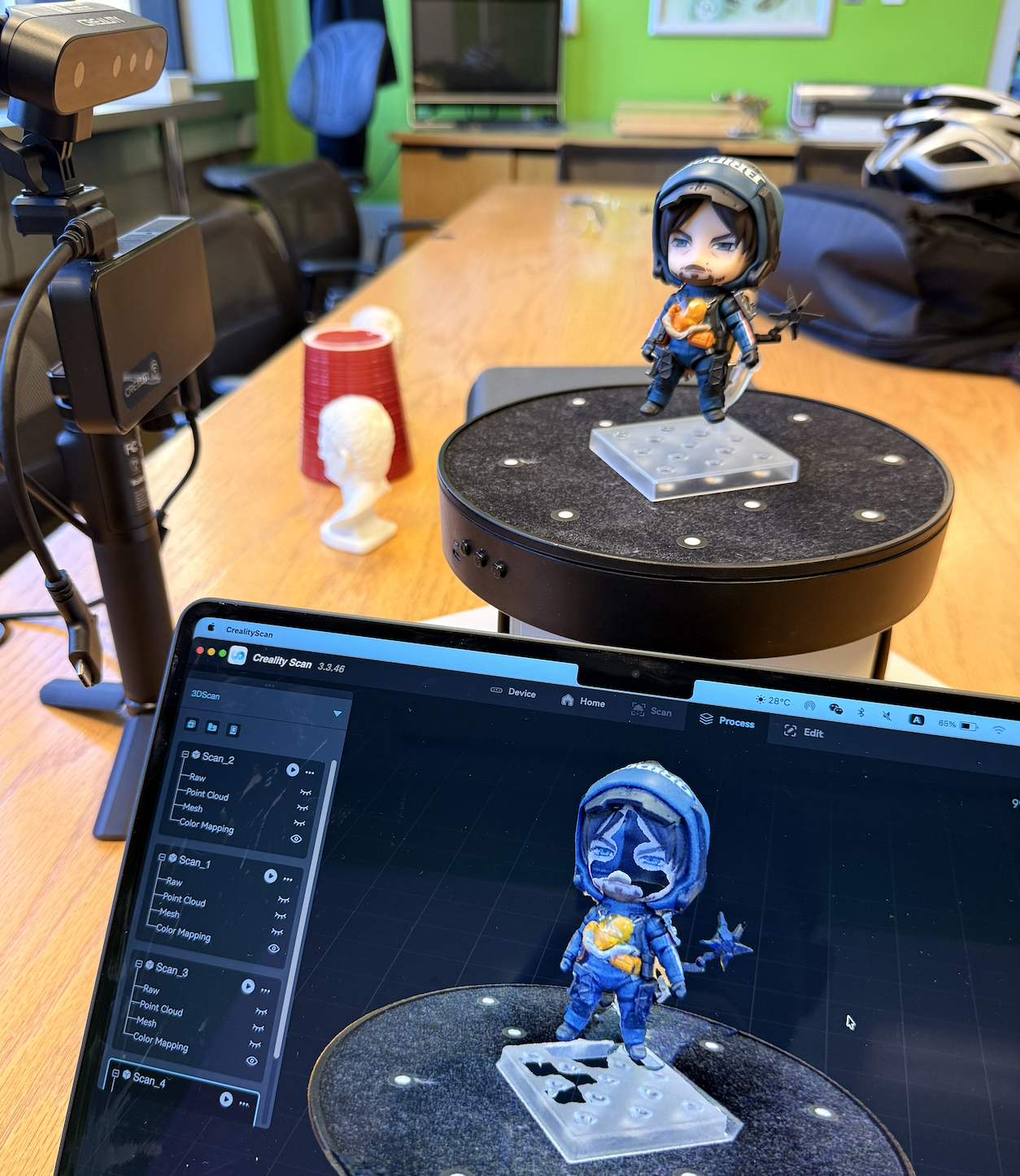
Missing part of the face due to light reflection
Reference Notes
Filament Types:
- PLA: Hard, biodegradable, suitable for figurines, models, and prototypes
- PETG: Similar to PLA but stronger
- TPU: Rubber-like flexibility, suitable for cases, seals, and dampers
File Types:
- STL: Common, highly compatible, but only stores geometry info with no color data
- PLY: Originally for 3D scanning, can store color data, but larger than STL
- AMF/3MF: Designed to replace STL, smaller file size with color and unit data
- G-code: The low-level programming language used to control 3D printers and CNC machines; specifies movement, temperature, and other instructions
Safety Note: 3D printers should be placed in rooms with good ventilation as they release UFPs (Ultrafine Particles).
Filament Safety & Ventilation Guide
| Filament | Ventilation Needed? | Notes |
|---|---|---|
| ABS | Yes | Releases styrene fumes; strong smell; use enclosure + ventilation |
| ASA | Yes | Similar to ABS; styrene emissions; proper ventilation required |
| Nylon (PA) | Yes | Emits caprolactam; can irritate eyes and throat; ventilate well |
| Polycarbonate (PC) | Yes | Produces BPA and strong fumes; needs enclosure + ventilation |
| TPU / TPE | Recommended | Generally mild fumes; additives vary; ventilation helps |
| PETG | Recommended | Low emissions but not zero; airflow improves safety |
| PLA / PLA+ | No | Very low emissions; safe for indoor use; minimal odor |
| PLA Blends (Silk, Wood, Glitter) | No | Same safety profile as PLA; low emissions |